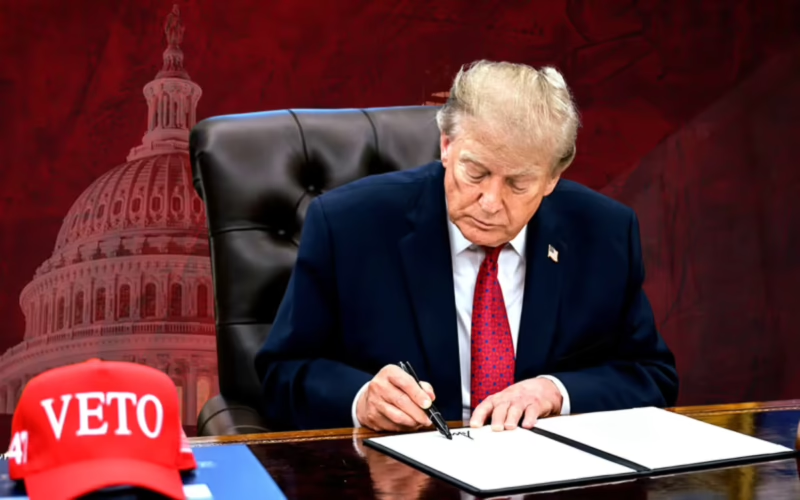
Donald Trump has found a new way to get ahead of the Democratic Congress that walks in on January 3: go after the people who actually know where the paperwork is. On Friday, November 20, he signed Executive Order 14438, titled “Protecting the Executive’s Privileges and Enhancing Efficiencies in Federal Contracting.” Every company working for the federal government, and every subcontractor down the chain, now has to tell the White House before it answers Congress about its work for the executive branch. Anything the White House calls privileged stays in the drawer.


What the order actually requires
Three things, effective immediately. Contractors must notify the White House and the agency that hired them of any pending or future congressional request touching their work or their communications with the executive branch. They must coordinate the response, including which privileges to assert. And they must follow instructions to withhold anything the White House or the agency deems protected by executive privilege.
Prime contractors are on the hook for their subs. Agencies have to brief every contractor “promptly,” and the Office of Management and Budget will write guidance on checking compliance, with no deadline attached. The stick is discretionary but real: agencies “shall consider” all appropriate actions, up to terminating contracts and suspending or debarring the company. What counts as privileged isn’t defined in the order. The White House gets to decide.
The White House pitch
The order roots executive privilege in the separation of powers and argues that Congress can’t get its hands on privileged material, including what passes between federal staff and contractors, before the executive has had a chance to assert privilege. The accompanying fact sheet says the government needs to work with contractors on “sensitive matters” without worrying that information ends up with unauthorized third parties; otherwise agencies stop sharing and critical programs grind to a halt. It also accuses some congressional leaders of harassing contractors.
Second move in a week
On Monday, November 16, White House counsel Will Scharf told every federal agency and department that no employee testifies before a congressional committee without sign-off from the White House counsel’s and legislative affairs offices. A week earlier Scharf had written to Rep. Robert Garcia, the California Democrat set to chair the House Oversight Committee, telling him to stick to “legitimate” investigations. Garcia fired back that “it appears Donald Trump has something to hide,” and that Congress gets its authority from Article I of the Constitution, not from the White House.
A White House official pointed to four letters House Democrats have already sent to federal agencies, the Department of Homeland Security among them, asking that documents be preserved. “Exorbitant demands,” the official called them. Garcia, for his part, has sent preservation letters to Trump’s relatives, chief of staff Stephen Miller, Vice President JD Vance, Attorney General Todd Blanche and former chief of staff Susie Wiles, among others.
Headed for court
Democrats flipped both the House and the Senate in the November 3 midterms, and this fight is likely to end up in front of a judge, especially once a contractor is told to sit on information Congress has subpoenaed. Courts have weighed executive privilege against congressional oversight before, and those cases tend to drag on for months. The first real test comes when the new committee chairs start sending requests after January 3.
A government that has to chase its own vendors
Strip away the Trump-versus-Garcia drama and there’s a bigger story here. If the White House needs an executive order to stop private companies from handing over government files, that tells you how much of the American state, national security included, has been farmed out to firms whose first loyalty is to the contract. Washington spent decades outsourcing public functions in the name of efficiency. Now it finds that the keepers of its secrets are vendors, and the only leverage it has is the threat of pulling the work. The real question isn’t who wins in court. It’s how much of the state is still run by the state.
Sources
- The White House: Protecting the Executive’s Privileges and Enhancing Efficiencies in Federal Contracting, Executive Order 14438 (November 20, 2026)
- The White House: Fact Sheet (November 20, 2026)
- Reuters via Political.org: Trump Orders Federal Contractors to Notify White House Before Giving Congress Information (November 21, 2026)