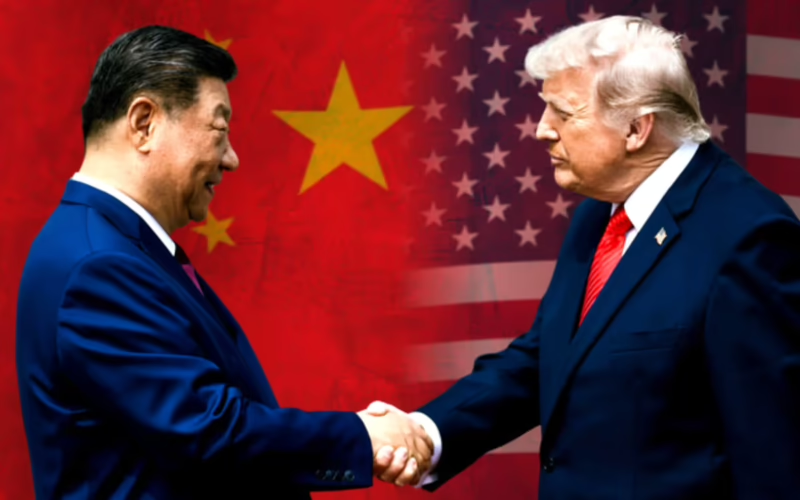
Donald Trump is in China. On Wednesday, November 18, Air Force One touched down at Bao’an airport in Shenzhen, and standing at the foot of the stairs was Xi Jinping. Red carpet, a wave from Trump, a handshake, a hug, the anthems, then the motorcade into the city. Back in May, when Trump flew into Beijing, Xi was a no-show at the airport.


Returning the favor
There’s a backstory here. In September, during Xi’s state visit to the United States, it was Trump who met him in person at Joint Base Andrews. According to Hong Kong’s The Standard, that was the first time in over sixty years a US president personally welcomed a foreign head of state on arrival, popes aside. Now Beijing is paying it back. Between these two, protocol has become a language of its own, and the message is simple: we deal with each other as equals.
Compare that with the other guest in town. Vladimir Putin got an honor guard from the People’s Liberation Army and was met at the airport by Cai Qi, a member of the Politburo Standing Committee. Not by Xi.
Trump flew in from Manila, where he attended the ASEAN summit and on Tuesday, November 17, sat down with the Quad: India’s Narendra Modi, Japan’s Sanae Takaichi and Australia’s Anthony Albanese, the club built to balance China in the Indo-Pacific. One day with the allies who hem Beijing in, the next in Xi’s embrace. That’s Trump’s foreign policy: keep every table open.
Why Shenzhen
The venue is no accident. Xi picked it as host of APEC 2026 at the close of the Gyeongju summit in South Korea in November 2025. In 1980 Shenzhen, then a fishing village on the Hong Kong border, became China’s first special economic zone, the test lab for Deng Xiaoping’s “reform and opening up”. Today it’s home to Huawei, Tencent, BYD and DJI, the very brands Washington has hit with tariffs and tech restrictions. Hosting the American president there, not in Beijing, is a way of showing him the industrial muscle the US wants to contain. It’s the third time China has hosted APEC, after Shanghai in 2001 and Beijing in 2014.
Thursday: the first three-way summit
On Thursday, November 19, on the sidelines of APEC, Xi will sit down with Trump and Putin together. China’s Foreign Ministry announced it on Monday, November 16, under an official name, the “China-Russia-U.S. Summit”: the first time the three leaders meet in person. Spokeswoman Mao Ning talked about an in-depth exchange on world peace and strategic stability among major powers.
Translation: nukes. New START, the last treaty capping US and Russian strategic arsenals, lapsed in February. Trump turned down Moscow’s offer to extend it and wants a deal that’s “new, improved and modernised” and brings China in. Beijing says being dragged into three-way talks is “neither fair, reasonable nor realistic”, pointing to the gap between its arsenal and those of Washington and Moscow. That gap is closing: the Atlantic Council expects China to pass 1,000 warheads by 2030. A senior US official told Reuters: “We do not expect to get to any kind of agreement.”
Then there’s Iran. Trump wants to talk about the war with both of them, and the front flared up again right on cue: US jets hit Qeshm island after three Iranian raids on Bahrain, and Tehran claimed the drone attack on Ali Al Salem air base in Kuwait. On Hormuz, the Atlantic Council notes, China wants the same thing Washington does: the strait open.
Moscow shows up with the agenda already written
The White House had said Ukraine wouldn’t be front and center. On Monday Trump put it right back on the table, saying he’d discuss it with Putin and Xi. The Kremlin went further. Putin aide Yuri Ushakov said the Russian president is “100% sure” he’ll see Trump one-on-one in Shenzhen to go over the Russian and American proposals on Ukraine, and that a joint statement of the three is being drafted. Spokesman Dmitry Peskov called the meeting “extremely significant”, warning that whatever is agreed “cannot be imposed on others”.
On Wednesday Putin and Xi met privately. Xi said Beijing and Moscow should “lead and advance the trend towards a multipolar world”. Speaking to APEC business leaders, Putin said sanctions, tariffs and export curbs “have largely run their course”, called the West a bunch of “former hegemons” and described Europe as in “humiliating decline”. Xi pledged to fight trade protectionism.
Italian analyst Dario Fabbri, editor of the magazine Domino, laid out what each side wants before the summit. For Washington, he told the daily La Verità on November 2, the real problem is that Russia has become China’s reservoir of energy and raw materials, so the American push on Ukraine is really an anti-China play. The summit, he added, can happen as long as the Chinese go along with it. Xi is going along, on his own terms: he plays host, keeps his arsenal off the table and talks multipolarity with Putin the same day. Moscow, for its part, walks into Shenzhen holding good cards: the bilateral with the host already done, a separate sit-down with Trump it treats as a done deal, and an America that, after years of sanctions, is negotiating with the Kremlin instead of trying to isolate it.
Two summits, one room that matters
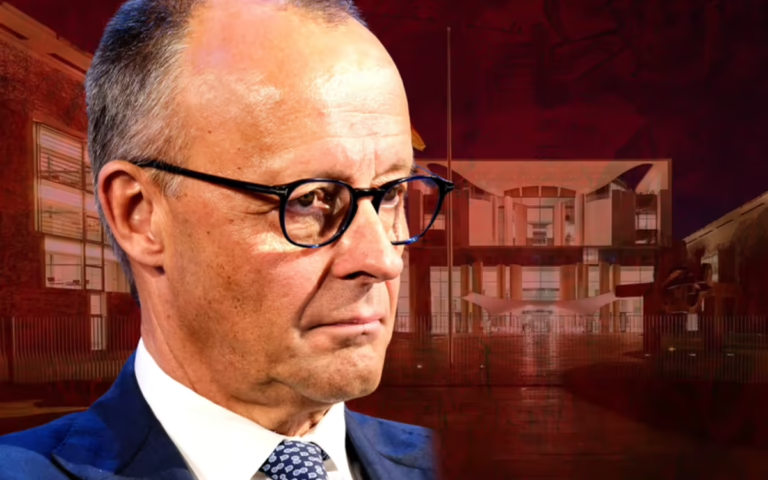
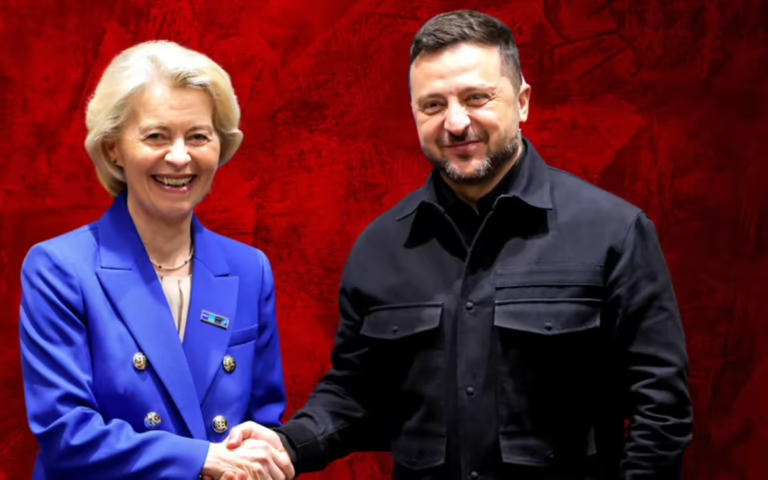
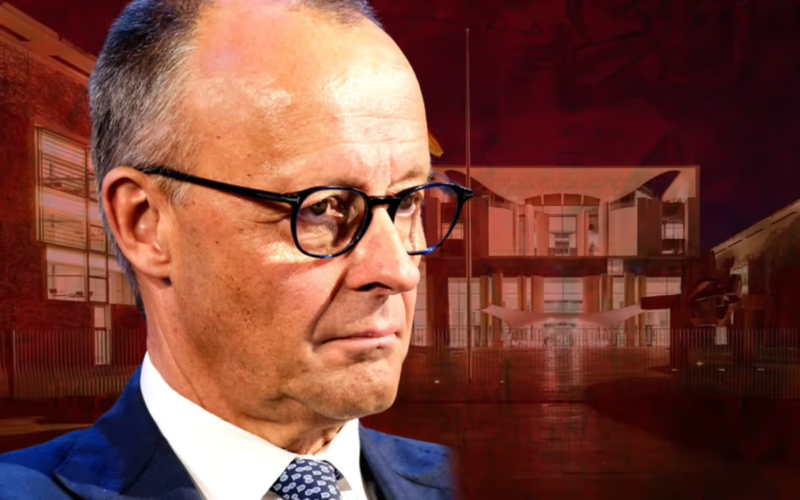
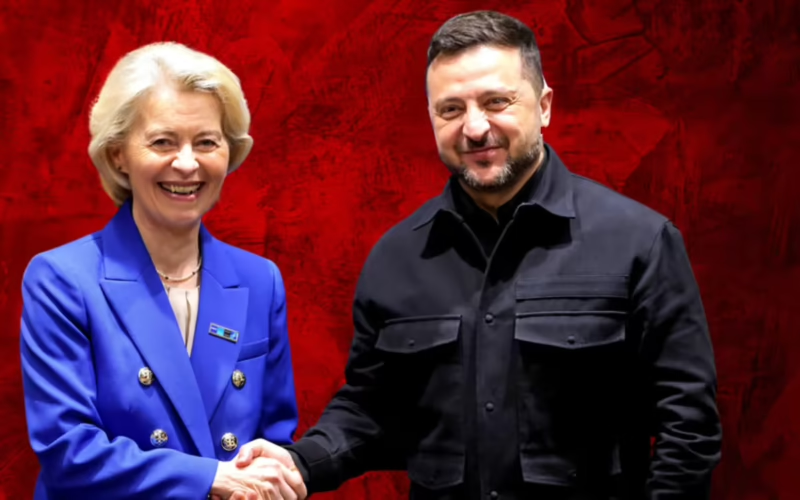
On Thursday, while the big three sit down in Shenzhen, the coalition of the willing meets in Berlin. Chancellor Friedrich Merz is hosting more than twenty heads of state and government with two goals: find the money for Ukraine’s defense in 2027 and agree on a common line for peace talks. Volodymyr Zelensky fears a deal cut behind Kiev’s back.
In Shenzhen they’re talking nuclear arsenals and how to end wars. In Berlin they’re talking about how to pay for another year of one, with American weapons bought by Europeans and a strategy set in Washington. Yet the strategic stability the three powers are haggling over is Europe’s too, a continent that long ago outsourced its own security.
Whoever has energy, industry and real power gets a seat at the table; whoever handed them off gets the bill. And that bill doesn’t land in the chancelleries. It lands on European families and factories, in energy prices that shot up after Russian gas was cut off, a choice that also pushed Moscow into Beijing’s arms. A sovereign Europe of peoples and nations would talk to Washington, Moscow and Beijing starting from the jobs and communities it’s supposed to protect.