Elbridge Colby didn’t stick around for Kiev’s side of the story. On Tuesday, November 17, at NATO headquarters in Brussels, the Pentagon’s policy chief told Ukraine’s backers that deep strikes inside Russia aren’t working, then left the room before Ukrainian Defense Minister Yevhenii Khmara gave his classified briefing on the war. The Telegraph broke the story on Wednesday night. On Thursday, November 19, the fallout lands in Berlin, where the Coalition of the Willing meets while Trump, Xi and Putin sit down together in Shenzhen.


How Colby walked out of the NATO meeting
The venue was the Ukraine Defense Contact Group, the forum set up at Ramstein in 2022 to keep weapons flowing to Kiev. According to a source in the room quoted by the Telegraph, Colby headed out “when the press left,” right after the public session wrapped. U.S. Ambassador to NATO Matthew Whitaker covered for Washington for the rest of the meeting. The same source says Colby had a flight to catch; he held a press conference in the NATO atrium around 5pm before heading to the airport.
What he skipped is the real story. Khmara’s briefing, a German source told the Telegraph, made the case that deep strikes are a key part of Ukraine’s war effort and will keep paying off. That’s exactly the argument Colby had just binned. “Most participants were left wondering about that comment,” the source said, adding: “Colby definitely appeared more on the side of Russia than on the side of Ukraine.” The German source also pointed out the obvious irony: the U.S. leans on deep strikes in its own war on Iran.
What Colby actually said about deep strikes
The public remarks are on the record. “While the public conversation focuses on the spectacle of deep strikes designed to incur pain on the Russian population,” Colby said, Washington’s assessment is that they “have not been effective in driving an end to the war, nor do they contribute to blunting Russia’s advances on the front line.” Hits on civilian targets like Wildberries, Russia’s online retail giant, “have actually probably hardened the Russian public’s resolve and the Kremlin’s own willingness to escalate.”
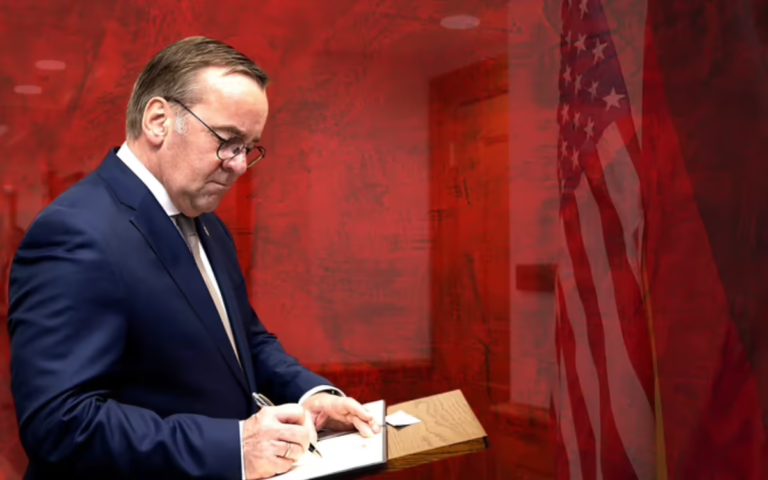
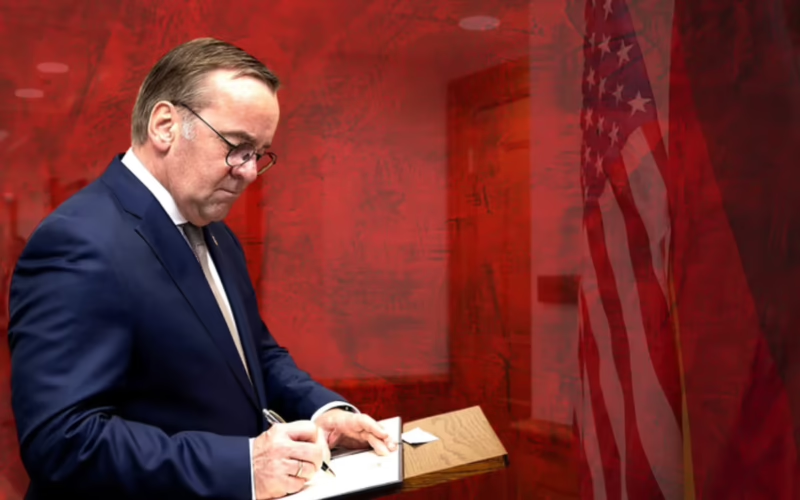
Washington’s pitch is to put the money into the front line and “associated midrange strikes,” which Colby called the most effective way to help Ukraine. He gave Kiev’s army credit: it’s “very effective” when it fights at the front and uses drones to slow Russian advances and hit supply lines, and it “should not be forced to fight with its hands tied behind its back.” Germany’s Boris Pistorius called the criticism “quite a stupid thing.” Britain’s Defense Secretary Wes Streeting: “It’s not for us to tell Ukraine how to fight their war.”
Kiev’s numbers: refineries and the Kerch Bridge
Kiev has receipts of its own. On Wednesday, two industry sources told Reuters that drone attacks have cut crude processing at Russian refineries by 45% since late October. Fifteen of Russia’s 35 biggest refineries are down or running slow, up from nine a week earlier, and some regions are short on fuel.
Then there’s the Crimean Bridge. Hit on Monday, November 16, hit again overnight into Tuesday, it came under attack for the third time in a week on Wednesday evening, and Moscow-installed governor Sergei Aksyonov shut traffic down once more. Zelensky framed it as payback for Russian strikes on Ukrainian bridges, infrastructure and cities: “We have long been telling Russia: Enough of striking bridges, cities and villages… But every time Russia chooses further escalation.”
None of it has moved the front line so far. That’s Colby’s whole point: Moscow absorbs the hits in the rear and keeps grinding forward.
The Coalition of the Willing in Berlin
The Berlin summit is co-chaired by German Chancellor Friedrich Merz, French President Emmanuel Macron and British Prime Minister Andy Burnham. More than 30 European leaders are there, plus Zelensky, Ursula von der Leyen and Trump’s envoys Steve Witkoff and Jared Kushner, who say the talks are about postwar security guarantees and rebuilding Ukraine’s economy. Merz wants all 27 EU member states chipping in for Kiev, which faces a 70 billion euro hole next year, and his message to the Americans was simple: “please, no surprises.”
On Wednesday the Commission proposed a fresh 45 billion euro loan for 2027: 25 billion for defense, 20 billion for the budget, raised as joint EU debt and repayable only once Russia pays war reparations. “We are as committed as ever to support Ukraine in war and in peace,” von der Leyen said. Burnham, according to AFP, is bringing more than 1,000 long-range strike drones, some able to hit targets over 1,000 kilometers away. That’s London’s answer to Colby, in hardware.
Shenzhen cuts the deal, Berlin signs the checks
Witkoff and Kushner have warned both sides, the Independent reports, that this round could be the last shot at a deal before a Democratic-led Congress flips the script: more weapons and cash for Kiev, plus a probe into the White House’s ties to the Kremlin. Their advice to Moscow: take the offer while Trump still has room to move. Kremlin aide Yuri Ushakov has already ranked the two summits for Russian state media: “What is happening here is the main thing. And what is happening there is important, but it’s secondary.” Zelensky fired back on X that “issues concerning Europe must be decided with Europe’s participation,” calling it “the only approach there can ever be.”
Kiev isn’t expecting much more than money out of Berlin. A senior Ukrainian diplomatic source told AFP the outcome should be “a commitment on financing and weapons. Perhaps it will help crystallise Europe’s role.”
Lucio Caracciolo, editor of the Italian geopolitics journal Limes, put it bluntly on La7 this week: Ukraine has been sacrificed pretty cynically, including by the people who backed it, and another year of war could leave it no longer a functioning state (Il Fatto Quotidiano, November 17).
Colby’s exit tells you where this war is going to be settled: between Washington and Moscow, with Beijing at the table. Europe’s governments are answering with a thousand drones and 45 billion euros in new debt, the very part of the war Washington has written off. What Berlin doesn’t have is a European peace plan of its own. The loan is backed by EU budgets, which means by Europe’s families and workers, and it only gets repaid if Moscow agrees to pay up. Right now, nothing suggests it will. A Europe of nations would play it the other way: cut its own deal, built on what its peoples actually need, starting with energy, instead of bankrolling the part of the war everyone else has already binned.
Sources
- The Telegraph (James Rothwell): Pentagon chief walks out of Nato talks after admonishing Ukraine (November 18, 2026)
- Reuters (via Cyprus Mail): German minister rejects US criticism of deep strikes as ‘stupid’ (November 17, 2026)
- AP (via Arab News): US tells Ukraine’s backers deep strikes don’t work (November 18, 2026)
- RFE/RL: Pentagon official says Ukraine war likely to last through winter (November 17, 2026)
- Euronews: US criticises Ukraine’s ‘deep strike’ campaign against Russia (November 17, 2026)
- The Independent: Ukraine war live, refineries (Reuters), Witkoff and Kushner, Zelensky, Crimean Bridge (November 18-19, 2026)
- AFP: Ukraine’s allies to meet in Berlin after Trump-Putin-Xi talks (November 18, 2026)
- Kyiv Independent: EU proposes additional 45 billion euros for Ukraine (November 17, 2026)