On Friday the White House took Ukraine off the table. By Monday Donald Trump had put it right back. “We’ll talk about, my favorite subject, Ukraine,” he told reporters before flying out to Asia, days ahead of the Trump Xi Putin summit in Shenzhen on Thursday, November 19. His own senior officials had just briefed that the meeting would stick to nuclear arms and the war with Iran.

What’s actually on the table in Shenzhen
It’s the first time the presidents of the United States, China and Russia will sit down together. The setting is the APEC summit on November 18 and 19. On Thursday Trump sees Xi Jinping first, for a bilateral and a working lunch, and then the three-way with Vladimir Putin.
Beijing confirmed it on Monday through Foreign Ministry spokeswoman Mao Ning: “in-depth exchanges on safeguarding world peace and promoting strategic stability in major-power relations,” a meeting of “ground-breaking significance.” Ukraine doesn’t get a mention in the Chinese readout.
Nobody’s holding their breath on nukes. New START, the last treaty capping the American and Russian arsenals, lapsed on February 5. Putin offered to keep honoring its limits for another year; Trump said no, because he wants a brand-new deal with China in it. Beijing’s answer hasn’t changed: Washington and Moscow cut their far bigger stockpiles first. A senior US official has already said no agreement is expected in Shenzhen.
Three leaders, three agendas
Trump comes in with his own read on the war. Putin, he says, is “backing down a little bit” and wants out; Russia, he claims, is “losing 25,000 soldiers in the month.” That number is his, and nobody independent has backed it up.
Moscow knows exactly what it wants. Kremlin spokesman Dmitry Peskov says Putin and Trump will talk about a settlement in Ukraine, and he brushed off the Yalta comparisons. Those came from Zelensky last month: “We really don’t want this to turn into ‘Yalta 2, 3, 4’ with a redistribution of influence.” Ukraine’s foreign minister Andrii Sybiha had warned that a Russia-China-US summit would “do only the opposite” and egg Putin on.
Xi is the coolest of the three. German President Frank-Walter Steinmeier, who met him in late October, told ARD that the Chinese leader showed “irritation” at the idea of discussing Ukraine in Shenzhen: “He explicitly pointed out that this is a European conflict, in which the Europeans must also be at the table.”
Europe meets in Berlin, Moscow sets the terms
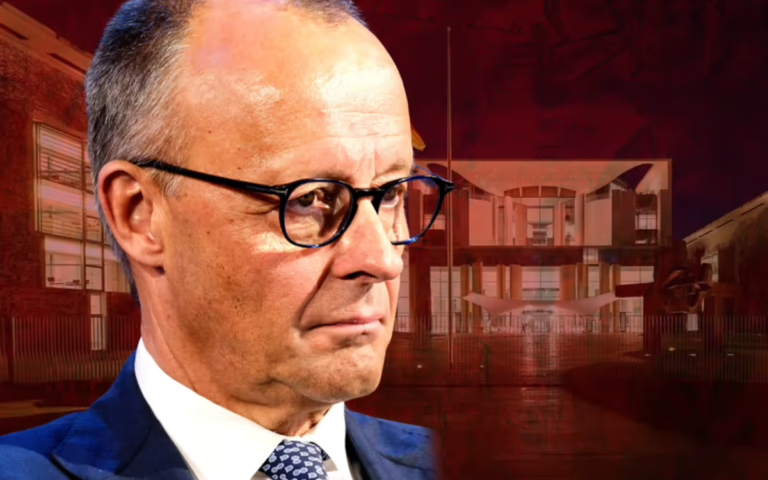
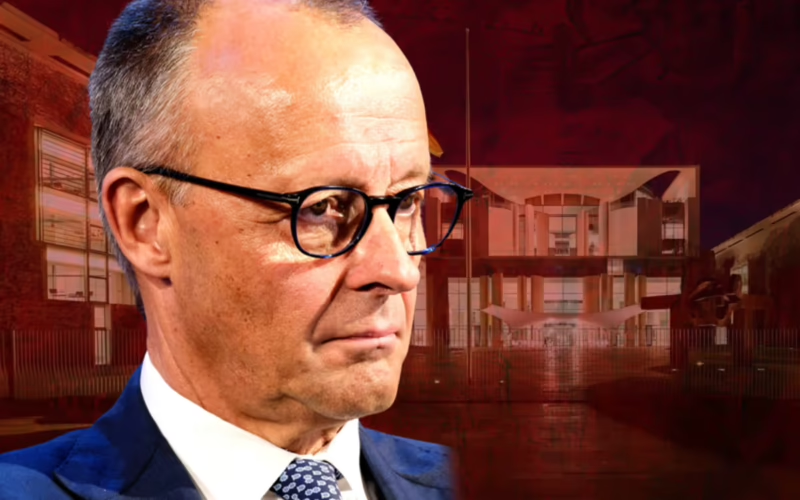
That same Thursday, Chancellor Friedrich Merz hosts the Coalition of the Willing in Berlin with Emmanuel Macron, British Prime Minister Andy Burnham and more than twenty heads of state and government, with US envoys Steve Witkoff and Jared Kushner expected. On the agenda: security guarantees and paying for Kiev’s defense in 2027. A US official quoted by Axios calls the two meetings a “coordinated diplomatic effort.”
So far the coordination is mostly on the calendar. Neither Zelensky nor the Europeans will be in Shenzhen. And on Monday Putin’s aide Yuri Ushakov slammed the door on the other table too, the three-way track with the Americans and Ukrainians that met in Abu Dhabi last week. Bringing Europe in “has not been agreed with us,” he said; no date is set for the next round, and first Moscow wants “a clear signal from the Europeans about what they want.” On Friday European Council President António Costa had named Europe’s team: Britain, France, Germany, Italy and Poland, plus the EU institutions.
A three-power world, and Europe’s war
Trump lands in Asia weakened at home: in the November 3 midterms Republicans lost both chambers of Congress. Putin doesn’t have that problem. He’s the one deciding who gets a seat and on what terms, and in Shenzhen he gets to talk about the war as an equal with Washington and Beijing. Xi gets to play host without signing up to anything.
The ones left outside are the ones footing the bill. Since 2022 Brussels has chosen to be Kiev’s bank and armory rather than a broker, and now it’s asking for a seat that Moscow won’t give it and Washington never guaranteed. The person reminding everyone that this is a European war, and that Europeans belong in the room, is China’s president. Peace on this continent is being talked about in Shenzhen, while Berlin works out how to fund 2027.
Sources
- France 24 — Xi, Trump and Putin to discuss ‘world peace’ at Shenzhen summit, China says (November 16, 2026)
- Kyiv Post — Trump pivots on Ukraine as Moscow resists Europe’s role in peace talks (November 17, 2026)
- HNGN — Trump says Ukraine will come up at Shenzhen summit; aides said it would not (November 16, 2026)
- NBC News — Trump en route to Asia ahead of meeting with Xi, Putin in China (November 16, 2026)
- Al-Monitor (Reuters) — Kremlin aide denies Russia agreed to include Europe in Ukraine peace talks (November 16, 2026)
- The Star (Reuters) — Trump to hold summit with Xi, Putin in Shenzhen on Thursday (November 14, 2026)