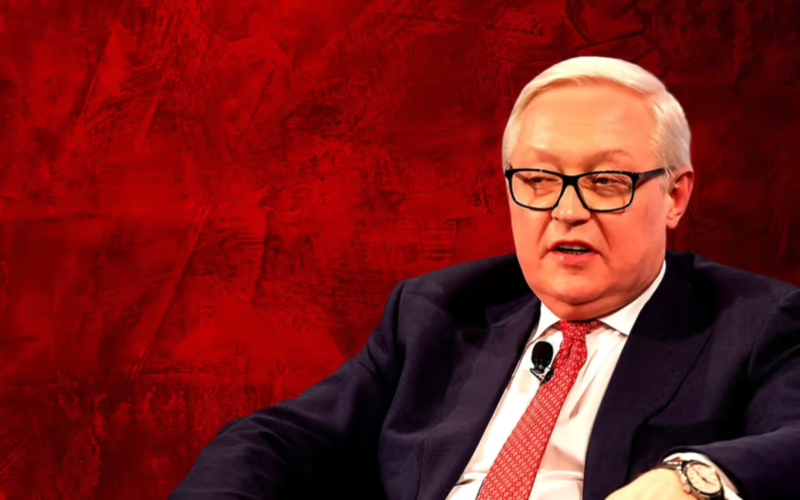
Moscow took less than a day to answer Berlin. On Friday, November 20, Russian Deputy Foreign Minister Sergei Ryabkov shot down the idea of security guarantees for Ukraine modeled on NATO’s Article 5, the clause that treats an attack on one ally as an attack on all. Any kind of “quasi membership” for Kiev in the alliance, he said, is “totally unacceptable” to Moscow.

Even coming up with a formula for Ukraine’s quasi-membership, or hunting for some sort of “creative solution” in this area, is “an unacceptable option for us,” Ryabkov told reporters. The no isn’t just about formal membership. It covers any arrangement that would give Ukraine member-level protection without a seat inside the alliance.
NATO off the table first, guarantees later
Ryabkov also laid out the order of play. Kiev first has to “recognise the irrevocable nature of our demand that this state must not join NATO.” Once that happens, he said, the issue of security guarantees “can be discussed one way or another.” No to NATO first, guarantees second, and Moscow sets the sequence.
He added that there are no agreements on the three-way format used so far, including the latest round in Abu Dhabi. And he widened the frame to the EU: given how fast the bloc is militarizing, Moscow doesn’t “see much difference between NATO and the EU.”
Kushner gets a public rebuttal
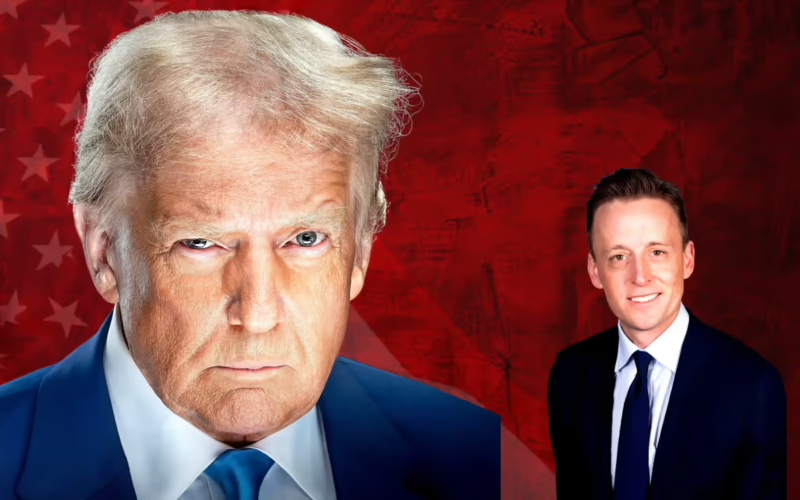
Ryabkov was answering two voices from Thursday’s Coalition of the Willing summit in Berlin. French President Emmanuel Macron said the question of Ukraine’s NATO membership should be reopened. Jared Kushner, Donald Trump’s envoy, said he and Steve Witkoff had gotten the Russians comfortable with guarantees based on Article 5, and with Europeans joining the talks.
On the first point, Moscow said no in public the very next day. Washington’s story of an agreement in principle doesn’t survive contact with what the Russians are actually saying, and anyone in Berlin banking on that formula to keep Ukraine hooked to NATO without letting it in now knows the Kremlin sees it as a back door into the alliance.
The “Eurotroika” heads to Moscow
On the second point, though, Ryabkov confirmed that work is under way on a visit to Moscow by representatives of Britain, Germany and France, what he called the “so-called Eurotroika.” The invitation comes from Vladimir Putin, who said in Shenzhen on Thursday that Russia had proposed, through diplomatic channels, that the Europeans come to Moscow to spell out where they stand. “We need to understand what Europe will bring to these negotiations,” he said. The format of further talks, he added, gets decided afterward.
Moscow is negotiating from strength and isn’t hiding it: NATO membership is off the table, guarantees come later, and the Europeans are invited to show up in Moscow. Europe is about to walk into that room with an idea, quasi-membership, that the Kremlin has already binned. If Paris, Berlin and London want a real say, they’ll need to bring a European security proposal of their own, built around the nations of this continent rather than borrowed from the Atlantic alliance.
Sources
- The Star (Reuters) — Russia pushes back against US idea of NATO-style security guarantees for Ukraine (November 20, 2026)
- Sputnik — Russia rejects any form of Ukraine’s NATO membership, deputy FM says (November 20, 2026)
- Al Jazeera — Russia unleashes retaliatory barrage on Kyiv bridges (November 20, 2026)
- LaPresse — Ukraine, Putin: “We invited Europeans to Moscow to understand their position” (November 19, 2026)